Friday, September 24, 2021

Lupine Publishers | Patients’ Complaints after Scaling and the Self-evaluation of Hand Instrumentation for Scales by Dental Hygienists

 Lupine Publishers | Journal of Pediatric Dentistry


Abstract

Objectives: This study was performed to understand such chief complaints through scaling operation performed by dental hygienists, as bleeding, or instrument sensation for dental patients and how to improve by explain the control method of them, in order to supply the better operation in the future and contribute the improve for the patient’s oral health.

Subjects and Method: Thirty five female dental patients who had received the scaling from 35 dental hygienists were participated in this clinical study, from the periods on March, in the year 2020 at G city, and the questionnaire method was performed with such questions as chief complaints after scaling with Likert 5 scale scores.

Results: The complaints or merits after scaling were examined as followings as bleeding complaint was 3.51±1.29 points, hyper-sensation of the tooth was 3.74±1.26 points, tooth crack or fracture as 2.68±1.18 points, abrasion as 4.02±1.15 points, possible for eating hot and hard foods as 3.20±1.32 points, early detect of caries as 2.17± 0.92, points, chance for consultation about implant or denture as 3.22±1.19,, possible for drinking acidic beverage as 3.20±1.32,points , possible for finding enamel hypoplasia as 2.20±1.23, points and possible for removal of filling or prosthodontic materials as 2.88±1.30 points. The evaluation of dental hygienist for the hand instrument manage skill is revealed as 4.11±1.10 points for supra-gingival calculus removal, 2.51±1.29 points for sub-gingival calculus removal, 4.17±0.95 points for using 1~2 mm lateral surface of scaler blade, 2.77±1.23 points for using the back surface of the scaler blade, 2.60±1.11 points for start scaling after demonstration with the tip guide. 3.22±1.35 points for grasping scaler slightly and insert it around the tooth as like as probe use, 3.14±1.37 points for vertical movement with slow motion of the tip along the long axis of the tooth on sub-gingival area, 2.88±1.34 points for using scaler tip with slight pumping touch at the tooth surface, 3.48±1.33 points for moving the blade vertically with inserting it on col area and 2.94±1.34 points for put the scaler tip locate beside the proximal area of the neighbor tooth on scaling at proximal area.

Conclusion: The abrasion or hypersensitivity were the big complaints from patients on scaling and dental hygienists were evaluated as high score in such item of scaling skills as supra-gingival calculus removal and using 1~2 mm on lateral surface of scaler blade, but got the least score in such item on sub-gingival calculus removal.

Keywords: Dental Scaling; control dental; dental hygienist; pain; dental calculus

Introduction

The periodontal care can be performed through such method as the non-operative periodontal treatment, operation and scaling or oral prophylaxis and professional mechanical tooth cleaning. Non-surgical periodontal care is aims for diminishing the gingival inflammation and eliminate the periodontal pocket through the removal of dental plaque and calculus surrounding the tooth, in order to re-attach or re-generation of the periodontal tissue. Moreover, it can be done as a pre-treatment procedure for severe periodontal surgery through performing the removal of plaque and calculus, polishing the root surface, applying the chemical therapy or occlusal re-adjustment. On the other hands, surgical periodontal treatment can be determined as operation surrounding gingival tissue through incision or excision of the periodontal tissue. It can be operated the calculus removal and root planning through the security of operating sight and re-forming of the gingival out line form through the suture after operation, in order to easy success for oral hygiene [1]. Scaling can be defined as the removal of plaque and deposit calculus on the tooth surface as well as the removal of tooth stain as caffeine or nicotine, in order to diminish the micro-organisms or changing the compositions at sub-gingival area, to result for prevention of periodontal disease by eliminating the etiology of tooth loss, as an effective method for periodontal disease. Periodontal disease is one of the most popular dental disease in the world-wide and dental hygienist is one of the proper dental workforces to manage the periodontal disease through performing the preventive cares as scaling. it should be needed for expert skill for scaling for dental hygienist and one pf the skill check would be instrumentation skill check for them at each potion of detailed areas at oral portions, because of elimination or diminish the oral micro-organisms through the removal of calculus or plaque by expert scaling. Although the scaling is a good measure to prevent periodontal disease, there has been revealed such complaints from the patients as hypersensitivity of the tooth, gingival bleeding, pain, abrasion of the cervical area of the tooth, removal of the filling or prosthodontic materials and the operators have to find their chief complaints to notice them to patients or do their best to avoid it with careful skills on scaling. It would be a good way for operator as dental hygienist to learn and training the bleeding control or stopping method before scaling about the procedure and anatomical structure of the blood vessel in the oral cavity or blood pressure control method or drug of choice as using Epinephrine derivatives or Bosmin agent. Another complaints or side effect from the scaling should be understood for operators in order to diminish them to perform the successful scaling. The aims of this study have been suggested to understand the chief complaint or oral status changes as well as checking and evaluation the operators scaling skill done by dental hygienist, in order to supply more safe and expert operation to dental patient in the future.

Subjects and Method

Subjects

Thirty five dental hygienists who have been working at dental clinics at Gwangju city, Korea were participated in this study for checking the scaling skill and also 35 dental patients who has visited dental clinic and received the scaling by 35 dental hygienists were joined to ask for chief complaint or side effect after scaling.

Method

This questionnaire method of examination was performed after achieved the certification for IRB (Institutional Review Board) from Bio ethic committee of Honam University as number as 1041223 201912-HR 18. Self-evaluation for managing the hand instrumentation skill of scaling by-themselves with using the 5 scaled score evaluation sheet after scaling, at Kwangju city on March in the year 2020. 10 questions such as supra-gingival calculus removal, sub-gingival calculus removal, using 1~2 mm lateral surface of scaler blade, using the back surface of the scaler blade, adjusting tip guide for scaling. grasping scaler slightly and insert it around the tooth as like as probe use, vertical movement with slow motion of the tip along the long axis of the tooth on subgingival area, using scaler tip with slight pumping touch at the tooth surface, moving the blade vertically with inserting it on the cervical area and putting the scaler tip insertion with proper location at the proximal area of the neighbor tooth on scaling at proximal area. Also 35 of their patients for scaling were joined to be asked for some complaints or side effects of scaling with use of 9 questions such as bleeding complaint, hyper-sensation of the tooth,, tooth crack or fracture, abrasion, possible for eating hot and hard foods, early detect of caries, chance for consultation about implant or denture,, possible for drinking acidic beverage, possible for finding enamel and possible for removal of filling or prosthodontic materials, by supplying the questionnaire sheet. The data was collected through the calculation of average mean points and standard deviation with 5 points as full score for each question and compared and analysis with their points with statistical analysis. Data were analyzed by use of the computer program as SPSS 18.0 for the data of mean and standard deviation with t value and significance, for 5 points of full score for each question.

Result

General characteristics for subjects

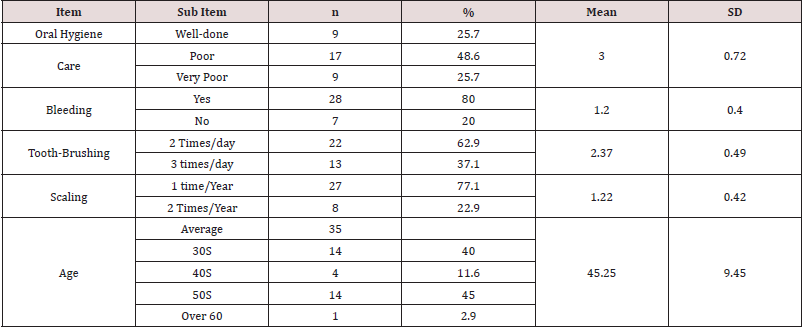
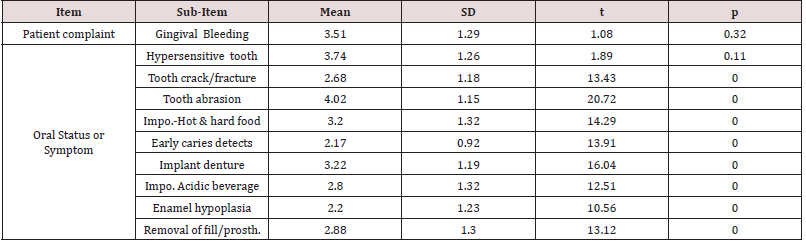
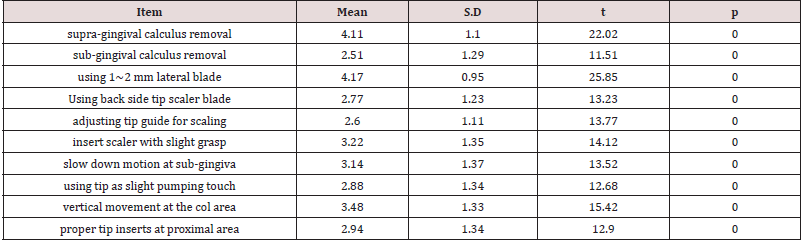
(Table 1). Through the general characteristics for patients of this study, the oral hygiene level was 3.00± 0.72 points, gingival bleeding was 1.20± 0.40 points, tooth-brushing level was 2.37± 0.49 points and the frequency of scaling was examined as 1.22±0.42 points. The average age of the subjects was 45.25±9.45 years old (Table 2). The complaints or merits after scaling were examined as followings as bleeding complaint was 3.51±1.29 points, hypersensation of the tooth was 3.74±1.26 points, tooth crack or fracture as 2.68±1.18 points, abrasion as 4.02±1.15 points, possible for eating hot and hard foods as 3.20±1.32 points, early detect of caries as 2.17± 0.92, points, chance for consultation about implant or denture as 3.22±1.19,, impossible for drinking acidic beverage as 2.80±1.32,points, possible for finding enamel hypoplasia as 2.20±1.23, points and possible for removal of filling or prosthodontic materials as 2.88±1.30 points (Table 3). The evaluation of dental hygienist for the hand instrument manage skill is revealed as 4.11±1.10 points for supra-gingival calculus removal, 2.51±1.29 points for sub-gingival calculus removal, 4.17±0.95 points for using 1~2 mm lateral surface of scaler blade, 2.77±1.23 points for using the back surface of the scaler blade, 2.60±1.11 points for adjusting tip guide for scaling. 3.22±1.35 points for grasping scaler slightly and insert it around the tooth as like as probe use, 3.14±1.37 points for vertical movement with slow motion of the tip along the long axis of the tooth on sub-gingival area, 2.88±1.34 points for using scaler tip with slight pumping touch at the tooth surface, 3.48±1.33 points for moving the blade vertically with inserting it on the cervical area and 2.94±1.34 points for put the scaler tip insertion with proper location at the proximal area of the neighbor tooth on scaling at proximal area.

Table 1: General characteristics for patient subjects (n=35, full score =5.0points).
Lupinepublishers-openaccess-pediatric-dentistry-journal

Table 2: Patient’s complaint the oral and habitual state changes after scaling. (Full score=5.0 points, n=35).
Lupinepublishers-openaccess-pediatric-dentistry-journal

Impo.: Impossible for eating, Impo. Acidic beverage; Impossible for drinking acidic beverage, Prostho: Prosthodontic appliance material.

Table 3: Self-evaluation points for the skill of the hand instrumentation for scaling done by dental hygienist.
Lupinepublishers-openaccess-pediatric-dentistry-journal

( n=35, full score =5.0 points).

Discussion

Scaling and root planning are very important for dental treatments. Scaling is a process eliminating plaque, calculus, necrotic tissue and so on, and root planning makes root surfaces of infected teeth smooth after scaling. Scaling and root planning reduce the number of sub-gingival pathogenic organisms, and they return unhealthy sub-gingival to a healthy state; therefore, they promote healing of periodontal tissue by inducing epithelial tissue attached to root surface. Until now, the studies about the effectiveness of hand and powered instruments for scaling and root planning, the influence on changes in the root surface and dentin hypersensitivity after periodontal treatment have been conducted. The differences of studies about the effectiveness of various instruments for scaling and root planning and the influence on changes in the root surface were shown by a type of instrument, sharpness, the experimental method of in vivo and in vitro, time and the frequency of strokes, pressure on the instruments and the contact angles. Table 1 showed the general characteristics of patients of subjects and the oral hygiene state was 3.00± 0.72 points in 5.0 points of full score as appraised as normal state of oral hygiene. It was distributed as 9 as 25.7% in well state, 17 persons as 48.6% in poor and the rest 9 as 25.7% in severe poor state. Gingival bleeding score was checked as 1.20± 0.40 points as much subjects were found as bleeding. 80.0% of them have bleeding as usual and 7 persons as 20.0% of them had no bleeding at all before scaling. Tooth-brushing level was checked as 2.37±0.49 points estimated as general level and the frequency of scaling level was as 1.22± 0.42 points as low level. The average age of them was 45.25±9.45 years old as middle-aged group. This study was performed for checking patient’s complaint for scaling or some symptoms or side effect from receiving the scaling, and these data from the patients would be contribute to understand them and to minimize the complaint or side effect for scaling by dental hygienists in the future. Recently, a various oral application method has been studied like varnish using mucus which is mixed 5% NaF with colophony resin [2].

Age and oral health consciousness affect its importance [3] oral health disorder Ju et al. [4] reported that the coverage of insurance coverage twice a year and the expansion from the high school level would be more appropriate than the current one. Oral health beliefs about the level of beneficial effects of toothbrush behavior were higher for subjects who wore toothbrushes three times a day and wore toothbrushes before going to bed [5]. Recently, it has been recognized that the symbiotic status of bacteria in the oral cavity is important because bacterial diversity is maintained, rather than antibacterial concept which reduces microorganisms themselves [6]. Table 2 showed that the complaints or merits after scaling were examined as followings as bleeding complaint was 3.51±1.29 points, hyper-sensation of the tooth was 3.74±1.26 points, tooth crack or fracture as 2.68±1.18 points, abrasion as 4.02±1.15 points, possible for eating hot and hard foods as 3.20±1.32 points, early detect of caries as 2.17± 0.92, points, chance for consultation about implant or denture as 3.22±1.19,, impossible for drinking acidic beverage as 2.80±1.32,points , possible for finding enamel hypoplasia as 2.20±1.23, points and possible for removal of filling or prosthodontic materials as 2.88±1.30 points. It means that the important chief complaints of scaling patients were gingival bleeding and hypersensitivity after scaling. It could be occurred the gingival bleeding through irritating the inflammatory gingiva on the time of the removal of calculus and hypersensitive dentin could be occurred by removal of calculus which would be a role of protection from outer irritation as cold or hot air or water, at the cervical area of the tooth surface. it needed to let patient understands this theory of bleeding and hypersensitivity through the oral education before scaling. The other symptoms were revealed as better after scaling than before, at large or a little bit. Anyway, patient education to inform the side effect or symptoms should be done to dental patient for scaling before operation. Park et al. [7] emphasize that the oral health belief on level of beneficial impact according to the toothbrush behavior was higher for the subjects with toothbrush 3 times a day and toothbrush before going to bed.

The evaluation of dental hygienist for the hand instrument manage skill is revealed as 4.11±1.10 points for supra-gingival calculus removal, 2.51±1.29 points for sub-gingival calculus removal, 4.17±0.95 points for using 1~2 mm lateral surface of scaler blade, 2.77±1.23 points for using the back surface of the scaler blade, 2.60±1.11 points for adjusting tip guide for scaling. 3.22±1.35 points for grasping scaler slightly and insert it around the tooth as like as probe use, 3.14±1.37 points for vertical movement with slow motion of the tip along the long axis of the tooth on sub-gingival area, 2.88±1.34 points for using scaler tip with slight pumping touch at the tooth surface, 3.48±1.33 points for moving the blade vertically with inserting it on the cervical area and 2.94±1.34 points for put the scaler tip insertion with proper location at the proximal area of the neighbor tooth on scaling at proximal area. From the results, dental hygienists could well perform the elimination of the calculus at the supra gingival deposition otherwise hard for sub-gingival portion. it should be training more and re-examination system for remnant deposition of calculus would be recommended to educate on training cause. Also, it revealed high score for using side surface of the scaler blade but low score to use a back side of scaler blade on scaling. It revealed average 2.5 points to 3.5 points for all check items. It means that the most dental hygienists could perform the scaling with middle leveled or a little bit high leveled ability and left some upgrade in the future. it would be recommended to training repeatedly for dental hygienists to operate scaling with one step by one step periodically.

Conclusion

This study was performed with questionnaire method about the patient’s complaint for scaling and self –evaluation for hand instrumentation skill done by dental hygienist in order to deliver the operation with improvement in the future. 35 dental hygienists who have been working at dental clinics in Kwangju city and 35 their scaling patients were participated in this study. The questionnaires for complaints or side effects were checked for scaling patients and hand instrumentation skills were checked for self-evaluation for dental hygienists after scaling. From the results, the obtained conclusion was as followings.

a) It was revealed that the main complaints after scaling were gingival bleeding and hypersensitive dentin and the others were not so big leveled problems.
b) Dental education for patient’s complaints or side effects should be done before scaling operation in order to minimize the patient’s complaints.
c) Dental hygienists have done well for removal of supragingiva calculus deposit and using 1~2 mm lateral surface of scaler blade, but not so high leveled score in the other items, left to be improvement.
d) Periodic training for dental hygienist should be needed to remind and to improve the hand instrumentation skill for scaling.

Acknowledgements

I express my gratitude to the dentist and the dental hygienist Moon Sun-Hee who contributed to the writing of this paper. We also thank patients and dental hygienists who participated in the questionnaire as individuals who contributed research materials, expertise, or time.

Conflict of Interest

There is no economic interest or conflict of interest.

Read More Lupine Publishers Pediatric Dentistry Journal Articles:
https://lupine-publishers-pediatric-dentistry.blogspot.com/

Friday, September 17, 2021

Lupine Publishers | The Use of NLP (Neuro Linguistic Programming) at Dentistry

 Lupine Publishers | Journal of Pediatric Dentistry


Abstract

If we can establish good communication with the patients who do not go to dental clinics gladly and behave timid, it will take us to the success. Since, the right communication between people makes everything easy. We can use NLP for receiving these signals, understanding the body language and all human relations. Linguistic scientist John Grinder and Mathematician Richard Bandler have taken an example of three people, who have excelled with special abilities at their fields, and have found out that all three have used interestingly similar patterns although they have different attitudes. Later, they have modeled the other people who has perfect performance like Anthropology Gregory Bateson and have prepared a book to use these methodologies. At the NLP, “N” stands for our neurologic system, “L” stands for use of language and “P” stands for coding our experiences and using them at decision-making. We can examine preparing our personal map by changing our filters with the help of NLP. Every individual has different map so, it is necessary to try to understand the world maps belong to other individuals, or rather to understand and accept, appreciate. In order to achieve success in relationship, the person at other side of you must trust you. The language using is very important, all we use the same language however the words we select may awake negative impact on the patients (Figures 1-5). NPL is a wide-scope communication model. Each person has a (genital) private area. Dentist office is a scary and different environment equipped with unusual instruments and to where people do not go frequently. This bothers the patients, especially the children. The first task surely belongs to the parents for preparation of the children to the treatment. To prepare the children coming to the clinic with prejudgment to the treatment requires too much patience and effort. Greeting the patient with smiling face and warmly, namely first impression, is crucial. The clinic should be introduced to the child patient, the information regarding why the treatment is necessary and what will happen should be given, the questions of the child should be listened in a great attention and right answers should be given. Heads and eyes should be on the same level when talking to the child. Does every method efficient every time at NLP? No, sometimes the success may not be achieved with one try, another technique is applied at second session, the patterns should be individual after familiarizing the person. The picture of own personality of a person consists of many pieces like a puzzle. The NLP specialist provides to form a pretty picture by combining these pieces harmonically. The eliminates the fears of the person by providing to think from different aspects. Fear arises at subconscious to protect the person. NLP specialists can recover the patients from these fears after few sessions.

Mini Review

There is a sentence of “Fear is the one generally the person has created in imagination” at the celebrated Desiderata poem of Max Ehrman. If we can establish good communication with the patients who do not go to dental clinics gladly and behave timid, it will take us to the success. Since, the right communication between people makes everything easy. You can understand if the patient, coming to you first time, is relaxed or not from his/her body language, glances, breathing and receive good or not good signals from him/ her. How can we get these signals, how can we understand the body language? Here we can use the NLP for all human relations. What is NLP? The NLP which is started to use almost at every fields recently, was actually first discovered at California in 1970s. Linguistic Scientist John Grinder and Mathematician Richard Bandler, have taken an example of three people, who have excelled with special abilities at their fields. The first of these three people is worldlycelebrated Hypnotherapist Milton Erickson, the other is famous Jewish Psychotherapist Fritz Perls and, the third is Virginia Satir who is referred as the mother of Family Therapy. How can these three people sign great successes by slamming their colleagues? Bandler and Grindler have found out that these three separate successful people have used interestingly similar patterns although they have different attitudes. Later they have modeled the other people who has perfect performance like Anthropologist Gregory Bateson and have prepared a book to use these methodologies. The meaning of the NLP letters.

Figure 1.

Lupinepublishers-openaccess-pediatric-dentistry-journal

Figure 2.

Lupinepublishers-openaccess-pediatric-dentistry-journal

Figure 3.

Lupinepublishers-openaccess-pediatric-dentistry-journal

Figure 4.

Lupinepublishers-openaccess-pediatric-dentistry-journal

Figure 5.

Lupinepublishers-openaccess-pediatric-dentistry-journal

Neurological (Neurological): It is related with our neurological system and our manner of experiencing the world using our senses. It transforms several sensorial information’s into conscious and unconscious consideration processes. These consideration processes affect our physiology, emotions and behaviors.

Linguistic (Linguistic): It refers to the use of language. It provides us to tell how we perceive our experiences at the world and the world. The words we use affect our experiences too.

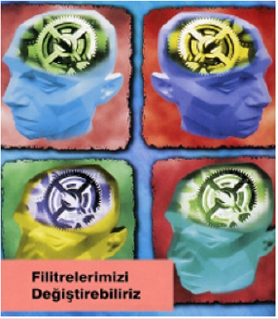
Programming: It is something we do intrinsically. We code our experiences and use our consideration patterns to enable us to solve problem, make decision, evaluate, learn, and improve. We do not always notice this happening consciously. Additionally, we do not know that the ability of recoding our experiences to get more reasonable results and organizing the internal programs, is inside of us. The mind and the body consist a system affecting each other. We can affect our physical situation by changing our mental situation or affect our mental situation by changing our physical situation. We all use our senses to explore the world. We get information from our environment and stock the impacts as picture. Seeing, hearing, smelling, tasting, touching (Figures 6-10). However, it is impossible to perceive everything presented to us instantly. We only get the ones passing through our own perception filters and the others stay out. These filters are individual. The filters of the person are based on his own experiences, culture, nurture way, beliefs, values and assumptions. The thing which is right to me is justified according to the thought coming from my inside and formed with my perceptions. But the same right thing may not be right to another one. Well, can these filters be changed? Yes, we can control the preparing of our personal map by changing filters with the help of NLP [1,2].

Figure 6.

Lupinepublishers-openaccess-pediatric-dentistry-journal

Figure 7.

Lupinepublishers-openaccess-pediatric-dentistry-journal

Figure 8.

Lupinepublishers-openaccess-pediatric-dentistry-journal

Figure 9.

Lupinepublishers-openaccess-pediatric-dentistry-journal

Figure 10.

Lupinepublishers-openaccess-pediatric-dentistry-journal

We can transform our world into wealthier and more exciting place by changing filters. “THE MAP IS NOT SAME WITH REGION”. Every individual has different map so, it is necessary to try to understand the world maps belong to other individuals, or rather to understand and accept, appreciate. Beauty, Peace, Freedom, Equality; The concept of Beauty involves different meanings according to each person. When saying Beauty, Mr. Ahmet sees the mountains far away, Mr. Mehmet sees shiny beach, Ms. Hasibe sees the face of the person she loves. Freedom is coalescing with God to one, use of time properly to other, and cheating his spouse to another one. We can understand the causes of the wars if we take into account these differences of mind maps. The conflicts between the people arise because of these differences. The most important thing to do here will be getting rid of limited maps by changing perception filters. To provide efficient communication, it is necessary to understand the world maps of other people or the person across us, to appreciate them. We must be open, curious and eager to experience. Every person has sufficient resources and potential since birth, however the use of this depends on that person’s choice. Communication is a circuit, when one person pays attention to the other, he receives what the other one says and does into his system, he contacts with his own senses and react conveniently with his own manner. When the other person pays attention to this person too, the circuit is consisted. In communication, what the other person understands is important rather than what we tell. In order to achieve success in relationship, the person at other side of you must trust you. Now we turn to the Dental Clinic, observe the behavior differences and the reasons of the patients with examples: Each person has one (genital) area, when we think the individual at the center of a circle, this circle which radius is about 50 cm, is the private area of that person, and this person allows only inseparable friends and relatives to get into that circle [3,4]. When we come across the people we do not know very well, we claw and shake hands but always keep that private area. Dentist office is a different environment that the people do not go frequently, equipped with unusual instruments, getting smell of sanitizer or drugs, scary sounds coming from aerator works, having presence of the staff and doctors with smock. The person coming here is mostly anxious, there are lots of questions in his mind, such as will I be have injection, will I feel pain, will my tooth be pulled, will the doctor reprimand me if he detects my mouth hygiene is insufficient. The things will not go well, if you do not prepare the patient psychologically, not relax him, take him directly to the treatment room, sit him to the chair and tie his veil immediately

Today the doctor and assistant are working sedentarily in treatments. The doctor sits on his right side, the assistant sits on his left side and the forced entrance of two stranger people he does not know before, one from right and one from left, to the patient’s private area, will increase the uneasiness of the patient more. This situation is getting more sensitive especially for the child patients. When one child patient comes to the dentist first time, it certainly requires allocating time, give information with a special manner and soft behaviors and not to start to the treatment without consent of the child. The language used is very important, all we use the same language however the words we select may awake negative impact on the patients. NPL is a wide-scope communication model. Our bodies, heart and spirit are the parts of one system and affect each other in different ways. Communication is an exchange of sensual experiences. There is certainly action and reaction in communication, good or bad action will be resulted whether we want, or we do not want. Communication is directly related with body language. When conveying bad news, touching to the patient’s arm softly substitutes too many words. Of course, our voice tone plays also great role here.

Preparing the Children to the Treatment

Of course, the first task here belongs to the parents. If the parents avoid from the dentist and show their fears within their dialogs at home, the child will record all the talks like a stereo even the child plays at one corner as if not concerning with them. The child will conclude that it is not a good thing if the most trusted people since his birth, speaks that much negatively about doctor. And one day when the parents take him to the dentist, the child not only will reject the treatment but also not want to go inside the clinic. The parents will be surprised very much and will ask themselves why this rejection happens although he is coming first time, he does not know anything. To prepare the children coming to the clinic with prejudgment to the treatment requires too much patience and effort. In such situations, it requires to talk with the parents. Generally, the Technician of Mouth and Tooth Health (can be said also assistant) will open the door for the patient coming to the clinic. Since the doctor engage with the patients at treatment rooms, they need to take responsibilities of very important tasks such as greeting the patient, preparing the patient to the treatment. In short, all the clinic staff along with the doctor should be very equipped with the communication skills. Greeting the patient with smiling face and warmly, namely first impression, is crucial. It should be acted with the principle of “Clinic is our home, patient is our guest.” If the first impression is not good, then the patient will think if he goes to that clinic second time again, although how so ever the treatment of the doctor is good. The entrance of the clinic, the decoration of the environment, the colors selected play a role on the patient feels better.

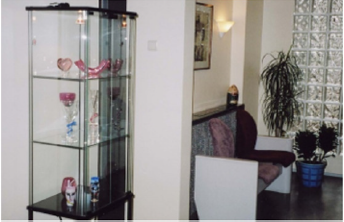
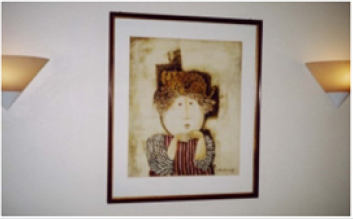
There are art objects at the cabinet seen at the picture and an egg-man statue on the radiator On the wall, pictures that will make people smile or look at them with pleasure should be preferred and excessive modern, unclear, pessimistic paintings should not be presented. A lightly playing of relaxing music background contributes the tranquility of the place. There must be actual magazines along with the picture books for the children at the clinic. Especially, the children picture books introducing dentist’s office can be read with the assistant while preparing the child to the treatment. Assistant should introduce the clinic to the child patient, information should be given about why the tooth treatment is necessary and what will be done, meanwhile the questions of the child should be listened gingerly and right answers should be given. When the child patient taken into the treatment room, it shouldn’t be wanted to sit him to the chair before introducing all the objects in the room, the explanations should be made like look, this is the chair on which tooth treatment is done, you will sit here, I will sit near you, doctor will sit on the other side and we all help your teeth to be healthy. Crouch down when talking to the child, in short, do not call him from on high. Glance from overhead and calling from on high may cause a sense of child as if the other one is stronger than him, the other is the authority. So, be careful at heads and eyes be on the same level when talking to the child. In such a conversation where the eyes are at the same level, the child decides that you value him as an individual and takes first steps toward trusting you. During a conversation where the eyes are at the same level, you make observation, understand his body language, glances, breathings, shortly if he is comfort or not. If there will be any treatment requiring anesthetize, it should be told to the child meticulously. You can give the injection within the nylon bag and must tell that the liquid inside will be injected under the gum, then that region will be anesthetized, and he will never feel any pain. Then, will the injection hurt? This question will be absolutely coming. The answer should be as yes but very little. Touch the arms with dental probe slightly, make explanations such as look, this hurts a bit, right, but you could bear, the injection will hurt just a little as a bite of a fly. The child understands that you always tell the truth and he will trust you. Again, we turn to the mistakes of parents. The mother bringing his child to the clinic is generally exciting. One day, a 6-year old boy came to our clinic first time, my assistant cared about him, he made the necessary explanations, then the child was taken to the treatment room, there was a baby back tooth problem required an amputation treatment, I gave information about the injection as written above, I answered all his questions which were asked intelligently, the mother was sitting on a corner at the treatment room. The child gave permission to the injection calmly, my assistant conveyed the injection which he prepared, just that time the mother stood up and said my boy, i will hold your hand, this was an unnecessary behavior but we allowed. Just as I prick, exciting mother tightened his boy’s hand hardly, this flux went from the child’s arm to his brain and he pushed my hand with the idea of “if my mother is that much anxious, it won’t be done good things to me”, he run away by getting out of his chair.

Yes, there are plenty of patients being afraid of injection. When coming to the clinic, he mentions this and says that make a treatment without injection, I am afraid. Phobias, fears are not but a kind of obsessions within the brain, these can be changed and eliminated. The fears were formed generally because of bad experiences before, at childhoods. Once we have burnt our hands on the fire, we would not approach to the fire anymore. If we have felt too much pain in the dentist’s office, every time we think dentist, the picture of that moment wakes on our eyes. How can we erase these negative thoughts? Let’s move on the examples.

new patient whom we have put full denture to his jawbone, came for control two days later, it was understood from his appearances that he was not glad. He said that he couldn’t have eaten anything, all his mouth was hurting, then he also added that he was so regretful having denture. All his body language and words were totally negative. First, we have listened him calmly, approached with emphatically, agreed on the inconvenient of the denture pain. Later we have passed to our questions. What did you eat at night? “Dear, I had soup (he had said that he could not have eaten anything, now some soap drunk), took two spoons from potato’s puree (this makes two) but as soon as I bite that Inegol meatball, I leaped up.” Yes, at first our patient generalized, when he said the life was awful, I could not eat anything, the situation specified and ended up at the Inegol meatball. Later I have started examination in mouth slowly, I pressed the right side of the denture lightly, asked if there was any pain, he said no, then when I pressed the left side, he said yes, just there. We have made this detection with our patient and hopelessness appearance of the patient started to vanish slowly. I said that I would rasp this hurting part completely and you would be comfort immediately and you could eat Inegol meatball this night.

took away the part I marked at lab and asked him to try again after polishing that place. His eyebrows totally got relax position, he said yes, it is all right now, we sent off the patient with pleasure after applied ointment with lidocaine on redness and minor wound and said he would use this ointment for several days. Thus, we minimized even zeroed this problem which was great for the patient. The second example emphasizes the importance of asking question at the application of NLP: I came across my friend on the road, I asked how he is, how is going on. The answer: “Do not ask, I am bothered, I am out of sorts.” Well, what is your problem? “I’ve got some financial difficulties.” I went to ask but I paid attention that my questions were carefully selected not random questions. Since when have you been in difficulty? “For last month.” What happened in last month? I got a counter done for the store, additionally I ordered new goods, I am sweating to pay back. I evoked him, who has started to believe that he was always distressed, he has experiencing difficulty just only last month, the problem minimized, now it is time to reassure a bit. I said that you are actually rising your standards, you have made a good decision, you have made a good work, everything will be great when your debt finishes. Thus, my friend’s negative will turn into positive, the troubles at his brain will be erased, good feelings will substitute, and I could see this situation on my friend’s face. Does every method efficient every time at NLP? No, sometimes the success may not be achieved with one try, another technique is applied at second session, the patterns should be individual after familiarizing the person. The picture of own personality of a person consists of many pieces like a puzzle. The NLP specialist provides to form a pretty picture by combining these pieces harmonically.

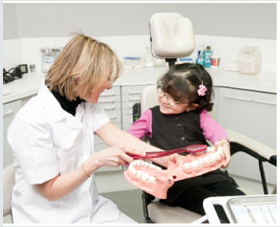
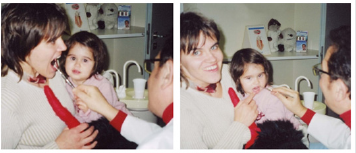
It is not necessity that this picture be visual, it can also be the picture of aural or feelings. When we turn back to our child patients, while we meet the child patient coming first time to our clinic, i prefer taking off my clinic smock, thus I break the formality between us and give an impression of not being different from the uncle neighbor. This makes him relaxed, then I tell him why we need to dress smock, I introduce the instruments over the unit of tooth, I tell what their functions, I show mouth mirror and probe, even i offer to change our roles, I want him to dress smock, to sit on my place, and examine me. They enjoy too much, they find tooth unit very interesting, I hand over the water spray and make them use it, then I introduce absorption motor, I explain why it should work with water and why the water needs to be absorbed, and I provide him to absorb the water in the glass with cannula, I tell that I can see more easily the inside of a mouth by changing the level of the chair and adjusting reflector. They enjoy making me sit on the chair and raising it, even dashing water spray into my mouth and sometimes their dashing water on my face make them smile and fear from the dentist vanishes. It will be appropriate for children to sit on the dental chair with their mother. He feels himself safer in her arms. First the mother is examined, the child sees that his mother is calm and that she is not affected from the examination by entering her mouth with a mirror, and then the child allows to be examined.

Mother Frank said: “I understood that fear is no use at all, it does not work at all.” We can ensure the person get rid of his fears by making him thinks in different ways. Fear arises at subconscious to protect the person. NLP specialists can relieve patients from these fears in a few sessions. The unpleasant events that we have experienced occupy our brains, and this will haunt us for life, and it will always be somewhere over there. NLP specialists are able to uncover and dispose of these bad events in their sessions and comfort the patient. Communication includes more than words. Not talking at all is also a communication method. In communication, body language is 55 percent, tone of voice is 38 percent, words are only 7 percent effective. As a result, communication is a circuit, what we do affects the other, and what he does affects us. If you notice that you have conveyed a different message than you intended while watching people’s reactions, we will accept this as a useful feedback and continue our practices by changing the way we communicate until we get the response we want. One last example from our clinic again: Ms. Seyda, in her 60s, was sitting in our treatment chair. Ms. Seyda, you probably do not brush your teeth well. Me, how can you say something like that, I brush my teeth three times or even four times a day. (she frowned her eyebrows, stopped looking at my face, started to look at the upper left wall corner, made clear with her whole body that she rejected me that moment. I accepted this as feedback, I realized that I could not express what I want to say well, the way I expressed was wrong).

a) No, of course your teeth are very clean, your mouth is sparkling, I did not mean it, I just wanted to emphasize that it would be better if you change your brushing technique.
(eyebrows came down, head turned towards me).
b) Oh, yeah, how is that technique?
c) Let me explain Ms. Seyda, the strong right-left movements with the brush have eroded the neck parts of your teeth.
d) The protective enamel layer, which is very thin in this region, is worn, the second layer of the sensitive tooth is about to be exposed and this will lead to excessive sensitivity.
e) So, that is why my teeth are so sensitive, doctor, can you tell me how to brush them?
f) The body language of Ms. Seyda started to be positive, curiosity and desire to learn arose. The technique was shown to her, the communication was completed, and the patient left the clinic satisfied.

Read More Lupine Publishers Pediatric Dentistry Journal Articles:
https://lupine-publishers-pediatric-dentistry.blogspot.com/

Friday, September 3, 2021

Lupine Publishers | Social and Psychological Impact of Traumatic Dental Injuries in Children and Adolescents: A Review of Literature

 Lupine Publishers | Journal of Pediatric Dentistry


Abstract

Traumatic dental injuries in childhood are quite commonplace, with a reported occurrence of up to 30% globally. The effect of traumatic dental injuries can have adverse effects on the child, his family and the dentist treating the child. This is an area which has always been neglected. The psychological effect of TDIs are individual for each patient and as such should be treated as a whole. Children who had suffered a traumatic dental injury seems to have the worse oral health related quality of life and they are more likely to have low self-esteem when their dental injuries are not properly treated. Children who have dental anomalies are judged poorly by their peers and the society as a whole and these judgements are increased many folds due to the presence of social media. At present there is a lack of proper research to study the psychological effect of traumatic dental injuries. Currently though there is advancement in the field of managing traumatic dental injuries there is still a lack of awareness regarding the young patient’s experience and values.

Keywords: Traumatic dental injuries; psychological; children

Introduction

Facial esthetics play an important role in self-identification, selfimage, self-presentation, and interpersonal confidence. The face is an important part of human development and facial expression is the most important element in non-verbal communication. The significance of the teeth in a smile should not be underestimated. Psychologists define a traumatic experience as an intense and sudden event that overwhelms the person’s capacity to cope with the memories and feelings that are triggered by it. Such traumatic experiences may lead to psychological symptoms, such as depression and anxiety [1]. The psychological effect of TDIs are individual for each patient and as such should be treated as a whole.

Stages of Psychological Development

Toddlers

Toddlers aged about 1.5 to 3 years are developing a sense of doing things on their own. The child has a very strong drive to investigate the boundaries set by adults to try out his or her own power and abilities, and to experience new, thrilling situations [2]. A traumatic experience such as intense pain puts limits on the child’s expanding world [3]. Furthermore, the experience of pain is imprinted on the mind of young children [4,5].

Later preschool childhood

During later childhood, aged 3–5 years, children develop a clear concept of themselves as ‘me’, knowing they are a separate person and no longer dependent on their parents in familiar situations. Development brings the child into a world of magic, oscillating between reality and fantasy. A feeling of guilt may intensify the psychological impact. Furthermore, at this age, children perceive the body as a bag containing feelings, tears, food, a heart, and blood; it is frightening if there is a hole in the bag, so it has to be mended as soon as possible.

School age

School age (6–12 years) is a period of life characterized by intense development in social skills and cognitive growth. Around 9 years of age, the child reaches an adult conception of life and death, namely, a full understanding that everyone who lives will also die, including oneself. This leads to a deeper understanding of the transient nature of life and might cause an easily evoked fear of death and illness [6]. Such a fear could be triggered by a TDI event associated with intense pain.

Adolescence

Adolescence (13–20 years) is the final period of the child’s development into adulthood. Intellectually, the young person is capable of formal operations [7]. Thus, an adolescent has adult intellectual concepts, but less experience than an adult. Teenagers often experience mood swings, as they are trying to achieve a stable inner identity and self-esteem. This is a process that goes on for years and takes great energy. Emotionally, the teenager will pass through different periods, the first of which is dominated by regression, as the wish to remain an innocent child clashes with the need to grow up. The last period also represents the final emotional separation from parents and the security of childhood, in which there is loss and often some degree of depression until the young person finds a new sense of belonging [8]. A traumatic experience with intense pain during this period of development may exaggerate any expression of regression, aggression, or depression.

Psychosocial Aspects of Traumatic Dental Injuries

The aspect of oral conditions on an individual’s physical and psychosocial wellbeing can be assessed through subjective indicators called Oral Health Related Quality of Life (OHRQoL) measures. The aim is to assess major changes in behavior that upset social function and consequently alter people’s quality of life [9]. Studies on oral health and quality of life should address four areas:

a) Pain and discomfort.
b) Functional aspects related to the ability to chew and swallow food without difficulty and speak and pronounce words correctly.
c) Psychological aspects related to physical appearance and self-esteem; and
d) Social aspects reflecting social interaction and communication with people [10,11].

These dimensions were described by Locker [12], based on The International Classification of Functioning, Disability and Health developed by the World Health Organization (WHO) [13]. According to Locker [12], mouth injuries and diseases cause damage that can directly lead to disabilities or indicate the following symptoms: pain and discomfort, functional limitation, and dissatisfaction with one’s own appearance. These symptoms can trigger physical, psychological, or social limitations, and consequently, disability. In turn, pain and discomfort can lead straight to disability. Oral health problems have been increasingly recognized as having an important negative impact on quality of life for individuals and populations. Traumatic dental injuries occur most commonly in the anterior sextants of the dental arches [14]. The psychosocial problem may occur due to the incident that caused the TDI or because of esthetic impairment by a broken or blackened tooth [15], an increase in dentin sensitivity attributed to the exposure by fracture [16] or another functional problem [15]. The magnitude of the psychological impact depends on the type of event or associated violence. For example, when TDI is the result of aggression, physical assault or abuse, the potential to generate psychological stress is much higher than when resulting from sports activities or an accidental fall. These conditions can cause serious esthetic, psychological and social damage, besides producing significant costs for the TDI victim and their family [17].

Ways to Explore the Impact of Traumatic Dental Injury

Quantitative way

To date, our knowledge of TDI impacts in children has been largely based on findings from quantitative research. Oral health related quality of life (OHRQoL) questionnaires have been used by researchers which have been validated for different age groups as well as in different languages [18–22].These questionnaires have been designed to measure the impact of dental anomalies or injuries on the child’s everyday life [22,23]. To calculate a total OHRQoL Score children are asked about the number of impacts that they had in the past three months on their daily life. Questions belonging to different fields of life are generally asked such as social life, wellbeing, oral symptoms, and physiological functions.

Qualitative way

The first documented case of the impact of a traumatic dental injury on social life was published 60 years ago [24]. It documented the case of a 9-year-old boy who was an active member of two choirs. The boy had an injury in which he suffered from uncomplicated fracture of four permanent incisors. Due to this the boy developed a lisp. The boy was removed from his position in the choirs and as a result the boy suffered from mood swings and sleep disturbances. The similarity of the psychosocial impact the boy had to the theoretical model of OHRQoL was striking [25,26].

Concern regarding appearance

Youths today are more concerned with their appearance. They are more concerned about following the norms setup by society. They are also concerned about the judgement of their peers and society as a whole. These judgements can have lifelong impact on their social life, career, and judicial outcomes [27-29]. Children who have suffered from dental anomalies as a result of TDIs have low self-esteem and are prone to bullying in schools. They are worried about the unkind comments that are thrown at them by society [30]. Hence it is the responsibility of the dentist to be sympathetic and provide timely treatment according to the child’s social standing.

Psychological effects of TDI The nature and the circumstances of TDI can lead to mental health problems in children. A study in the UK showed that one in six children suffer from post-traumatic stress disorder up to eight months after the injury [31]. Hence it is necessary for pediatric teams responding to dental emergencies to properly assess the children psychologically after a TDI and put them under proper care for their emotional support [32].

TDI, its treatment and its effect

The treatment of TDI has a psychological consequence of its own on the concerned children and their families. When the TDIs are complex the concerned treatments are prolonged, and this places high demands on the concerned children and their families. Studies in the UK, Canada and USA have shown these [33-36]. In a study in Toronto which tried to find out the impact of avulsion injuries on the children and their families, it was found that the children had to visit hospitals nine times in a year on an average. They received over seven hours of dental treatment and lost two weeks of schooling at an average [33].It is also necessary to follow the long term consequences and prognosis of the teeth treated after a TDI throughout adolescence and early adulthood [37].

Economic consequences

The patient should be informed about means of reducing a possible economic impact of the TDI (i.e. support from public or insurance companies). knowledge and skills to make an accurate diagnosis and perform appropriate and prompt emergency treatment. Lack of postoperative information might add to emotional stress during emergency treatment as the child anticipates future problems. Give information in as concise and positive a manner as possible, emphasizing the likelihood of recovery and also give written information. Pain adds significantly to both physiologic and psychological stress. This means that immediate and skillful pain control should be given very early at the emergency ward or if possible, at the place of injury. Post traumatic follow up gives an excellent opportunity to talk the whole treatment through, from the moment of the injury until the expected end result. This will reduce negative feelings about dental care.

Conclusion

There are many implications of TDIs. They may be social or psychological. In most cultures, the face is regarded as the most precious characteristic of human identity. A smile is an essential feature both for children and adults. A traumatic dental injury may affect the appearance due to a fracture, discoloration of teeth or avulsion of teeth. The trauma event in itself might have serious psychological effects. Keep in mind that even the youngest child will remember. Negative effects could be reduced by means of good emergency care. The dental team must be aware of and understand the anxiety of both children and parents. Awaiting treatment is a stressful experience for children, especially if they are also exposed to the frightening sight of other emergency patients and are in unfriendly surroundings. Even with recent advancement in the management of TDIs to improve dental wellbeing there is lack of awareness about the psychological and economical implication of TDIs.

Read More Lupine Publishers Pediatric Dentistry Journal Articles:
https://lupine-publishers-pediatric-dentistry.blogspot.com/



Friday, August 27, 2021

Lupine Publishers | Reconsideration of Invasive Technique for Occlusal Fissure Before Fissure Sealant

 Lupine Publishers | Journal of Pediatric Dentistry


Abstract

Fissure sealant is one of effectual method for prevent occlusal caries. Therefore, removing contaminated organic debris and plaque was important process to attain sufficient sealant retention. The aim of this study was revaluated the cleaning method and invasive technique to an occlusal fissure. Twenty-four teeth with deep fissure were used in this study and 15 teeth were cleaned by finger spreader, bristle brush and ultrasonic scalar, respectively. Remain 9 teeth were prepared fissure groove using three kinds of minimal intervention burs (BR-48, CD-50F and CD-53F). The ratio of remaining debris by fingers spreader, bristle brush and ultrasonic scalar were 35 %, 65%, 25% respectively. In contrast, each fissure with invasive technique was not observed residual debris. The average preparative fissure groove by BR-48, CD-50F, CD-53F were 1.38mm, 1.40mm and 0.76mm in width, and 1.58mm, 1.66mm, 1.18mm in depth, respectively. From these results, invasive technique as fissure pretreatment before acid etching might be effective to success for good fissure sealant retention for a deep and narrow fissure and a CD-53F bur was most less preparative sound enamel.

Keywords: Fissure cleaning; invasive technique; fissure sealant

Introduction

Immature permanent teeth have a risk of occurring dental caries. Especially the percentage of occlusal pit and fissure caries is over 80% of all caries in immature permanent teeth [1]and Carlos JP et al. reported that a high percentage of these occlusal lesions occurred the caries in the first 3 years after tooth eruption [2]. Dental plaques and organic debris are easy to accumulate in a pits and fissure of occlusal surface in immature young permanent teeth, and those plaque and debris were hard to remove from pit and fissure completely by ordinal cleaning method such as using low speed of rotary tooth brush. Therefore, a technique by capping of fissure with fissure sealant is widely used in ordinal dental clinic for preventing occlusal caries. However, fissure sealants are occasionally removed out partially or totally from fissure for a long term of retention. Complete or partial fissure sealant retention after 8-10 years was reported by some studies [3-5]. The main reason of them seems that fissure sealants are not able to penetrate into whole of fissure for the characteristic of narrow fissure and prevention by dental plaques remaining into a bottom of pits and fissure. Therefore, complete removal of debris and plaque are important factor for success of fissure sealant. Although conventional technique with rotary brush was commonly used by clinical dentist, there is a possibility of remaining dental plaque or organic debris in a pits and fissure with this treatment. The shape of fissure groove might influence on disturbing fissure cleaning. Because fissure are deep and narrow in immature molar teeth typically and it is hard to attach cleaning instrument to those debris and they are staying in the bottom of fissure for long period Moreover deep and narrow shape of fissure is disadvantage for penetrating of fissure sealant into whole of fissure groove. Therefore some researchers insist that invasive technique as enamel pre-treatment by fissure bur [6-9], air abrasion [10,11] or laser [12,13] before enamel etching and fissure sealing are necessary to success of cleaning of pits and fissure and penetration of fissure sealant sufficiently. However, these invasive techniques are not widely acceptable for young teeth treatment and there has still discussed whether invasive pre-treatment is necessary for fissure sealants or not [14-17]. Therefore, this study is investigated that the debris removing ability from noninvasive pit and fissure were using several kinds of cleaning methods such as conventional rotary brush, ultrasonic scalar, chemically agent. Furthermore, invasive techniques as a fissure pre-treatment were also investigated using several minimal intervention burs.

Materials and Methods

Sample corrected and preparation

Twenty-four extracted human permanent molar and wisdom teeth with deep pit and fissure were used in this study. Following an approval of use for this study by the patients, those teeth had checked their depth of fissure by dental photography and adapted similar condition of fissure were used in this study. Furthermore, they had no caries in occlusal surface. Before research, all teeth were cleaned by brushed and washed with distilled water and stored at room temperature.

Application of artificial organic debris into fissure groove

To specific valuation of removing debris ability, each fissure of all experimental teeth was filled with artificial organic debris. The organic debris was prepared according to a previous report [18]. It contained 20% of Liquitex (Liquitex Co., USA), 30% of Starch gruel (Fueki-ko, Fueki Co., Yao, Japan), 30% of Poster color (Sakura Co., Osaka, Japan), and finally 20% of solid food fragments for rats (MR-stock, Nihon-Nosan Co., Yokohama, Japan) originally used for animal feed. All ingredients were mixed together to simulate a clinical debris condition. All specimens were then stored in a moist chamber until start study.

Group classification

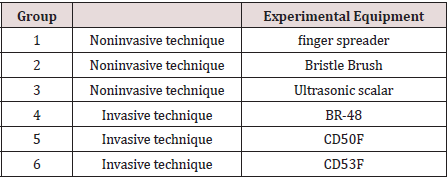
All specimens were classified into 6 groups at randomly according to the difference of cleaning method or fissure pretreated burs. Each 5 teeth were elected in group 1 to group 3 respectively (15 teeth) and those teeth were evaluated several cleaning methods without fissure invasive technique. Group1 was cleaned fissure by hand instrument (finger spreader). Group 2 was used bristle brush to fissure cleaning. Group3 was performed fissure cleaning by ultrasonic scalar. Remaining 9 teeth were divided into 3 groups (Group4 to 6) in each 3 teeth. These three groups were applied invasive technique using several types of fissure preparative burs. The detail of this classification was shown in Table 1.

Table 1: Classification of each group.

Lupinepublishers-openaccess-pediatric-dentistry-journal

Experimental Procedure for noninvasive fissure

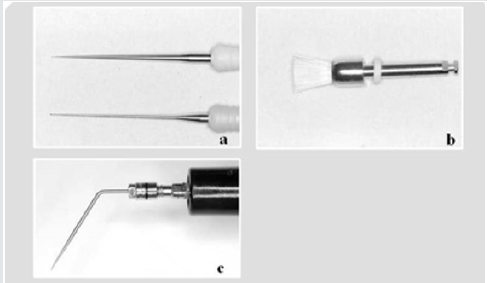
In Group 1, fissures were cleaned with finger spreader (Mani Inc Tochigi, Japan). The fissures were gently excavated with a 15- size flare finger spreader using a vibratory motion and rinsed with water spray. This process was continued until the debris was removed completely from the fissure groove (Figure 1a). In Group 2, fissures were cleaned by pointed bristle brush (Merssage brush CA, YDM Co, Tokyo, Japan) with water spray. Bristle brush was setting in a low-speed handpiece (550 cycles per minute) and leaning procedure was performed for 30 seconds. All teeth were then dried with oil-free compressed air for 20 seconds and subjected to the following investigations (Figure 1b). In Group 3, fissures were cleaned with ultrasonic scalar with thin tip (ENAC, SC point 4, OSADA Inc Tokyo, Japan) under water spray condition. Scalar head were touched and moved with the fissure groove gently and continue procedure until artificial organic debris removing (Figure 1c). Even organic debris was not removed completely, cleaning procedure using above each method was stopped within 30 seconds. Then each fissure was observed by stereomicroscope to check the ratio of residual debris.

Figure 1: The instruments for fissure cleaning.

Lupinepublishers-openaccess-pediatric-dentistry-journal

Fissure preparation for invasive technique

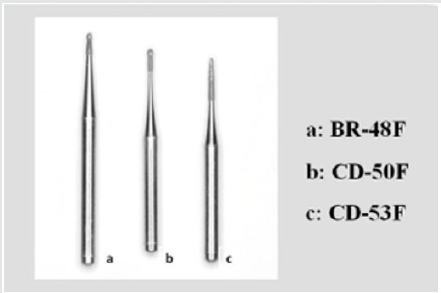
Remain 15 teeth were used for invasive technique. After each fissure groove were washed, then fissure groove was prepared by three types of diamond burs. Type 1 and type 2 were small round diamond burs (BR-48 and CD-50F). Type 3 (CD-53F) were fissure type diamond bur. These all burs were produced for Minimal Intervention (MI) and are especially designed to prepare the cavity minimally as possible. These burs were connected with high speed hand piece and keep the speed as a 3000 rpm during fissure preparing procedure (Figure 2).

Figure 2: The instruments for fissure invasive technique.

Lupinepublishers-openaccess-pediatric-dentistry-journal

Stereoscope and SEM observation of invasive fissure

To verify the surface characteristics, each 3 teeth in group 4 and group5 (total 6 teeth) were selected randomly and fissure condition after invasive technique were examined using a stereomicroscope (SMZ-10, Nikon, Tokyo, Japan). Following stereomicroscopic observation, and then followed by scanning electron microscopic (SEM) examination. For SEM examination, specimens were dehydrated with a graded series of aqueous ethanol (70%, 80%, 90%, and 100% ethanol) for 24 hours in each solution, dried with liquid CO2 using a critical point dryer device (JCPD-3, JEOL, Tokyo, Japan), coated with a platinum layer to a thickness of 15 μm, and observed by SEM (JSM-T220A, JEOL) at 15 kV.

Results

The evaluation of each fissure preparation by several kinds rotary bur

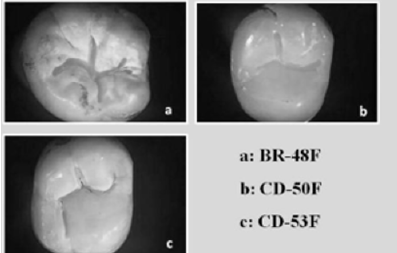
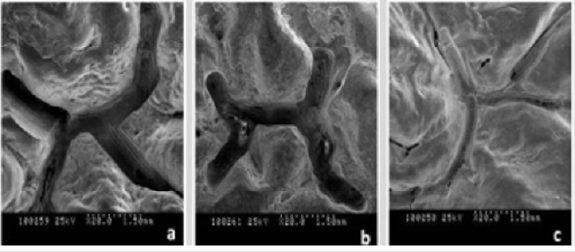
Figure 3 showed the condition of after pretreated fissures in invasive technique groups by stereoscopic observation. There was not revealed an abnormality mentioned such as a tooth fracture, tooth crack in all teeth. Scanning electric microscopic observation indicated that the pretreated fissure by the bur of CD-53F made most shallow and narrow fissure shape in three kind’s diamond burs (Figure 4). The width of invasive fissure of BR-48F, CD-50F, CD-53F were 1.38mm, 1.40mm, 0.76mm respectively. The average of depth of invasive fissure of BR-48F, CD-50F and CD-53F were 1.58mm, 1.66mm, 1.18mm respectively. Total results by fissure preparation by each diamond bur indicate in Table 2. The ratio of residual debris by each cleaning method both noninvasive fissures and invasive fissures. In the groups of normal fissures showed 25 % of debris was residue in ultrasonic scalar groups. In contrast, 35% and 65 % debris were not removed out from fissure by finger spreader and bristle brush, respectively. In 3 gropes with invasive technique to fissure, all debris was removed completely from fissures (Table 3).

Figure 3: Stereo-scope observation of fissure groove after invasive technique.

Lupinepublishers-openaccess-pediatric-dentistry-journal

Figure 4: SEM observation of fissure groove after invasive technique.

Lupinepublishers-openaccess-pediatric-dentistry-journal

Table 2:The mean width and depth of each fissure groove after invasive technique.

Lupinepublishers-openaccess-pediatric-dentistry-journal

Table 3: The ratio of residual debris by each cleaning method.

Lupinepublishers-openaccess-pediatric-dentistry-journal

Discussion

To attain fissure sealant, penetrate into pit and fissure completely, the process of fissure cleaning that cause free of gross plaque and debris is important key for success of fissure sealant application. This study demonstrated that several fissure cleaning techniques using finger spreader, bristle brush and ultrasonic scalar, had not success of dental organic debris removing completely in non-inversed fissure. Remaining organic debris was mainly present on the deep narrow fissure wall and bottom of the fissure groove. These results supported that previous several similar researches that compared with both bristle brush cleaning and mechanical fissure preparative cleaning. They suggested that remaining debris and pellicle were not removed from the bases of fissures by routine cleaning and etching procedures [19-21]. Therefore the reason of remaining debris of noninvasive fissure groups in this study should be the entrance to shallow and wide groove of fissure were easy to remove debris by ordinal cleaning instruments, conversely the deep fissure wall and bottom of fissure groove were not able to attack by cleaning instrument directly. Thereby many organic debris were not removing from fissure and remaining deep side fissure wall and bottom of groove even carried out several fissure cleaning techniques using finger spreader, rotary bristle brush and ultrasonic scalar. Many cases of these phenomenon were occurred by not only relate fissure depth, but also fissure width.

These types of fissure were inhibiting fissure cleaning effectiveness, and it cause insufficient etching agent and sealant penetration, and consequently reducing adaptation ability and easy to lack of retention of sealant are occurred. From this evidence, invasive technique as a fissure pre-treatment was effectiveness to both fissure cleaning and sealant penetration. Many researchers proposed that mechanical invasive technique has good advantage for fissure sealant retention [22,23]. The result of several in vitro studies on the invasive technique with mechanical preparation has indicated that the risk of microleakage is reduced when the fissure is preventively enlarged with rotating burs [24-26]. Shapira and Eidelman have shown higher retention rate in vivo with the use of a #1 round steel bur at low speed after 6 year, compared to non-mechanically prepared fissures [27,28]. Lygidakis et al. suggested their clinical study in observed for four years that the mechanical preparation of occlusal surface offer sealant retention [29]. Even these studies have demonstrated, still several researchers insist that invasive techniques were not necessary for fissure sealant application. Blackwood JA et al. reported that there was no significant difference in microleakage between the fissure cleaning with traditional pumice prophylaxis technique, fissure invasive technique and air abrasion technique [30]. However, its studies were evaluated by microleakage test using thermal cycling procedure within dwelling 500 cycles. Previous Yamada et al compared sealing ability of fissure sealant both Carisolv-and bristle brush-treated using microleakage test with 400 cycles thermal cycling [18]. Their result demonstrated that the fissure treated with bristle brush showed remaining organic materials in the bottom of groove. However, the results of microleakage tests were not specific difference both the group of removing debris completely and the group of remaining debris in bottom of the fissure.

They discussed the possibility of that the fissure sealant may have maintained a high sealing effectiveness to the marginal side wall even debris was not removed and remaining on the deep side wall in the fissure during microleakage test procedure. Therefore, microleakage test may not be a reliable evidence for the decision whether fissure pretreatment before etching and fissure sealant application is necessary or not. Accordingly sealing force of sealant was significantly reduce according passage of time and this situation might has a possibility of causing occlusal caries when it is occurred the detach or fracture of fissure sealant, and the debris which are contaminate several bacteria penetrate into bottom of the fissure. Although invasive technique is a good method for sealant retention, this technique should not necessary to transact for all pit and fissure. It must be selected for only hardness to debris remove completely by ordinal technique such as bristle brush and prophylaxis paste and prepared for only broad narrow fissure sharp fissures. De Craene et al. has also similar suggestion, they proposed that in a tooth with open fissures, not suspected of being carious, a prophylactic treatment for non-invasive pit-and-fissure sealing technique should be chosen, by contrast in case of deep and narrow fissures that are discolored and suspected of being carious, the invasive pit-and-fissure sealing technique should be chosen [22]. Welbury et al. reported that purposeful invasive technique just to widen the base of a fissure in a sound tooth is an invasive technique, which disturbs the equilibrium of the fissure system and exposes a child unnecessarily to the use of a handpiece or air abrasion [30]. Therefore, they insisted that invasive technique for occlusal fissures was not necessary and undesirable method. To resolve this doubtful problem, invasive technique must be performed most minimal preparation as possible.

This study was also investigated the invasive technique, then evaluated the instruments for fissure pretreatment both fissure type and round head diamond point bur which were produced for minimal intervention. Present results demonstrated that round head diamond point bur made causing unacceptable width and depth fissure sharp, because it seems round head diamond bur was smoothly moving and control was not easy to keep a fissure external form consequently fissures became more wide and deeper than what was assumed. Conversely, fissure type of diamond bur caused minimal fissure groove and it might be acceptable depth and width of them. This research proposed that CD53F fissure head diamond bur that was used in this study may good candidate for fissure preparation instrument and Garcia-Goddy et al. also recommended fissure type diamond point bur (Sorensen bur) [7]. From this result and previous those results, the fissure type diamond point may most acceptably instrument for invasive technique. The results of present study strongly suggested that the important factor for success of fissure sealant should select a case of proper fissure whether invasive technique is necessary or not. In case of performed invasive technique to immature occlusal fissure, minimal preparation of fissure pre-treatment is the key for safety and sufficiently good retention of fissure sealant.

Conflicts of Interest

There are no conflicts of interest.

Read More Lupine Publishers Pediatric Dentistry Journal Articles:
https://lupine-publishers-pediatric-dentistry.blogspot.com/
Friday, August 20, 2021

Lupine Publishers | The Effectiveness of Nitrous Oxide Sedation Combined with Behavior Management in a Private Dental Practice in Saudi Arabia

 Lupine Publishers | Journal of Pediatric Dentistry


Abstract

Purpose: To show the different dental treatment responses and outcomes of different pediatric age groups under nitrous oxide (N2O), based on the experiences of a private practice, to show that N₂O inhalation is an effective tool for all young patients if used in conjunction with behavior management techniques, and to show that N₂O is an outstanding tool for decreasing the dentist risk and stress when using pre-medication or general anesthesia.

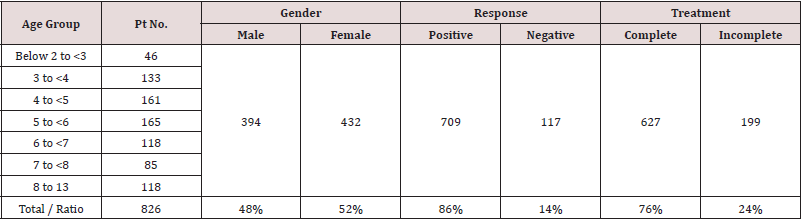
Methods: A total of 826 middle- and upper-class children 394 males and 432 females, ranging in age from < 2 to 13 years old, participated in this study using the rapid induction method. All patients were treated over a total of 1,924 appointments (average, 2-3 visits per patient). The PDCC (Pediatric Dental Consulting Center) created criteria for each child’s evaluation at the first visit prior to categorization, according to which behavioral rating scale he or she belonged. Moreover, these categorizations were based on McDonald and Frankel’s Behavior Rating Scale with Wright’s Modification, in conjunction with the PDCC criteria. During the first visit, we enhanced the parents-child-dentist relationship. The child was familiarized with the dental environment by a skillful dental team, while the parents were educated about several behavior management techniques and the use of N2O sedation.

Results: N2O worked effectively when combined with basic behavior management techniques. The child’s first visit to the dental clinic should only include familiarization, acclimatization and enhancement of the parent-child-dentist relationship, as well as education. It was observed that, patients 4-6 years old responded best including children with bad experience and different personalities.

Conclusion: Behavior management and N2O constitute an excellent combination. If both applied and used properly, pediatric patients can be treated successfully. The pediatric dentist should master his or her communication skills with children and parents. Based on this study, children with moderate to severe anxiety can be managed with proper application of behavior management and with the use of N2O sedation (with a high success rate of 91%).

Keywords: Nitrous oxide; behavior management; N₂O sedation

Abbreviations: BBG: Basic Behavior Guidance; BG: Behavior Guidance; CNS: Central Nervous System; DFA: Dental Fear and Anxiety; DBP: Dental Behavioral Problem; CDA: Child Dental Anxiety

Introduction

Basic behavior guidance (BBG) is based on scientific principles. The proper implementation of behavior guidance (BG) requires an understanding of these principles. BG is more than pure science, and it requires skill, empathy, coaching and listening [1]. Thus, BG is a clinical art form that is built on a foundation of science. Moreover, today’s treatment of children provides a foundation for that child’s future acceptance of dental treatment. We always have goals when working with children. The first goal is by far the most important: the child should be willing to return to the office or clinic for subsequent visits [2]. The second goal is the completion of the dental procedure. Lack of child cooperation is primarily a result of fear and discomfort [2]. Nitrous oxide (N2O) inhalation sedation should be offered to children with mild to moderate anxiety to enable them to accept dental treatment more readily and to facilitate their coping in future visits. This sedation should not be segregated from the support provided to the child by the dentist [3]. In many parts of the world where deep sedation techniques are more common, the use of such agents is often limited to hospitals. N₂O inhalation sedation remains the preferred technique for the pharmacological management of anxious pediatric dental patients [3]. Dentists have expertise controlling anxiety and pain for their patients. Anxiety and pain can be modified by psychological techniques, but in many situations, pharmacological interventions are needed [4]. N2O is a colorless and odorless gas, with a faint, sweet smell. It is an effective analgesic/anxiolytic agent (a drug that relieves anxiety), which causes central nervous system (CNS) depression and euphoria and has little effect on the respiratory system. N₂O is rapidly absorbed, allowing for both rapid onset and recovery (2-3 minutes) [4]. There are no absolute contraindications for the administration of N₂O-oxygen inhalation, only relative ones. The most common contraindication is the patient’s inability to perform nasal respiration because of obstruction from a cold, a deviated septum or enlarged adenoids [4]. The most common undesirable effects of N2O are nausea and vomiting, which rarely occur and are primarily observed only when the concentration reaches or exceeds 50% [5]. Behavior management is important for facilitating good-quality dental treatment in pediatric patients.

Methods

A total of 826 patients (age range, younger than 2 years of age to 13 years old) were randomly selected from middle- and upper-class children at the Pediatric Dental Consulting Center (PDCC) in Riyadh, the capital of Saudi Arabia. The study was performed by a female pediatric dentist practitioner based on 6 years of studying patients treated under N₂O sedation between 2000 and 2005 over a total of 1,924 appointments. A rapid induction method was used in young children at a concentration of 70% N₂O, which was incrementally decreased, while the other children received mostly 40-50% N₂O. After the treatment, the patient was under 100% oxygen for 3-5 minutes using nasal hood with scavenging circuit (Accutron Inc., Parkside Lane, Phoenix, AZ 85027, USA). The patients’ responses to N₂O sedation were evaluated from their first visit to the clinic for treatment until the last visit, when the treatment was either completed or partially completed. The PDCC created for each child’s evaluation at the first visit prior to categorization, according to which behavioral rating scale he or she belonged. Each child was categorized after a tell-show-do technique and examination. As a strict rule, the dentist never attempted to start any dental work during the first visit. The parental separation technique was applied for all patients during the dental treatments, except with children younger than 3. 5 years old, for whom the parents were allowed to remain inside the dental operating room if needed. The parents were allowed to look inside the room once during treatment to allow their children to feel relaxed. Audio music was also used as a distraction tool and to reduce anxiety [6-12]. Moreover, these categorizations were based on McDonald and Frankel’s Behavior Rating Scale with Wright’s Modification, in conjunction with the PDCC criteria listed below for testing and comparison.

Naj Criteria for Patient Selection at the First Visit

a) New Experience (with or without gag reflex)
b) Bad Experience
c) Young Age (younger than 3½ years old)
d) Child’s Personality (spoiled, temper tantrums, defiant, high strung, fearful, compulsive, suspicious, tense)
e) Special Needs

Naj Behavioral Rating Scale Modifications

a) Cooperative (++): These children had good rapport, were interested in the dental procedures, and laughed and enjoyed themselves.
b) Potentially Cooperative (+): These children accepted treatment but were perhaps cautious or reserved, with minimal apprehension, and they followed directions.
c) Uncooperative (-): These children were reluctant and uncooperative, with limited negativity, sullenness, and withdrawal.
d) Definitely Uncooperative (- -): These children refused treatment, with forceful crying, fear and extreme negativity.

During the first visit, we enhanced the parents-childdentist relationship. The child was familiarized with the dental environment by a skillful dental team, while the parents were educated about several behavior management techniques and the use of N₂O sedation. A well-implemented policy for the parent separation method was discussed thoroughly for the benefit of the child. In patients with special needs and younger patients, the use of protective stabilization was explained to the parents. For children who were definitely uncooperative upon categorization, we informed the parents regarding the possible use of HOME. A written parental consent was acquired. Subsequently, applying behavior management guidance (BMG) with the child, he or she was psychologically prepared for the next visit by choosing and smelling the N₂O-scented mask (Accutron Inc., Single-Use Nasal Hoods), which made the child excited to return and start the treatment at the second visit; the first visit ended with positive reinforcement (toys).

Results

A total of 826 patients were enrolled in this study; the children ranged in age from younger than 2 years of age to 13 years old and were treated at PDCC under nitrous oxide sedation from 2000 to 2005 over 1,924 visits. The minimum time per session was approximately 45 minutes, while the average number of visits for each patient was 2-3 appointments. The study included 394 (48%) male patients and 432 (52%) female patients. The patients were classified after health and demographic information was gathered at the first appointment. In 6 years of studying patient (n=826) responses to N₂O, 709 (86%) patients demonstrated positive responses, and 117 (14%) had negative responses. The results also indicated that among the patients selected for this study, 76% (627) completed their treatments, and 24% (199) were unable to complete their treatments (Table 1). The number of patients who responded negatively or positively were recorded based on the selection criteria. The results classified 259 patients as New Experiences, 184 as Bad Experiences, 137 as Young Age, 235 as Child’s Personality, and 11 as Special Needs (Table 2). Among the evaluated patients, 86% (709) responded positively to treatments under N₂O; the highest positive response rate was for the children who were classified as New Experiences (94%), while for those classified as bad experiences, the rate was 91%. Child’s Personality was the third highest classification, with 86%, while Young Age (66%) and Special Needs (64%) had the lowest positive responses among all groups.

Table 1:Total Number of Patients and Rates of Each Age Group, Gender and Positive and Negative Response, Completed/Incomplete the Treatments under Nitrous Oxide Sedation.

Lupinepublishers-openaccess-pediatric-dentistry-journal

Table 2:Total Number of Patients and Rates of Each Age Group, Gender and Positive and Negative Response, Completed/Incomplete the Treatments under Nitrous Oxide Sedation.

Lupinepublishers-openaccess-pediatric-dentistry-journal

Negative response to treatment under N₂O was also evaluated, indicating an overall significantly low rate (14%) of 117 patients. The results also showed that the special needs and young age patients had the highest negative response rates to treatments under N₂O, 36% and 34%, respectively, while child personality had the lowest negative response (14%). Bad experiences and new experiences showed the lowest negative responses to treatments under N₂O, 9% and 6%, respectively. The patient behavior scale was also evaluated to determine its effects on the children treated under N₂O. The results for all patient groups were classified using the PDCC Behavioral Rating Scale. The data showed that 251 (30%) patients were classified as Potentially Cooperative, 379 were classified as (46%) Uncooperative, and 196 (24%) were classified as Definitely Uncooperative, while no patients were classified as cooperative (Table 3). The 826 patients treated under N₂O had 1,924 visits, with a minimum time per session of approximately 45 minutes. The average treatment time per patient was 2 to 3 appointments. After the evaluation was conducted, each patient was classified using the PDCC Behavioral Rating Scale (Table 3).The results showed that the highest positive response rate to treatment under N₂O, was in the Potentially Cooperative patients (93%), followed by those Uncooperative(90%), while the Definitely Uncooperative group showed a lower positive response (68%). The negative response rate to treatment under N₂O, which was evaluated using the PDCC Behavioral Rating Scale, showed that the highest negative response rate was in the Definitely Uncooperative patients (32%), with the Uncooperative and Potentially Cooperative groups showed lower negative response rates of 10% and 7%, respectively.

Table 3: Number and Rate (%) of the Patients Positive and Negative Response, treated under Nitrous Oxide Sedation, Grouped According to Patient Behavioral Rating Scale.

Lupinepublishers-openaccess-pediatric-dentistry-journal

Regarding treatment status, and the results showed that among the 627 (76%) patients who completed treatments under N₂O, 555 patients completed treatment with positive responses (using the PDCC Behavior Rating Scale), and 72 patients completed treatment with negative responses. An incomplete status was reported for 199 (24%) patients, with 85 patients stopping treatments at the parents’ request and 69 patients failing to complete treatment because they did not appear at their appointments (NSU) (Table 4). All 826 patients were also divided by age group to evaluate which group had the most positive response. There were total of 46 patients that were between <2 and <3 years, 133 patients between 3 and <4, 161 patients between 4 and <5, 165 patients between 5 and <6, 118 patients between 6 and <7, 85 patients between 7 and <8, and 118 patients between 8 and 13 years of age. The results indicated that the patients with positive response were found in all age groups older than 3 years old, with the success rate ranging between 86% and 95%. However, the 6 to < 7-year-old age group showed the highest success rate (95%), while 2 year to < 3-yearold age group showed the lowest positive response rate (57%) and, similarly, the highest rate of negative response. Patients 3 to > 4 years of age showed a positive response rate (74%) under N₂O (Table 5). Sex was also evaluated to test its effect on the patients’ responses to treatment under N₂O. There were 394 (48%) male patients and 432 (52%) female patients. The results showed that girls tended to respond more positively to treatment (54%) than boys (46%) (Table 6).

Table 4: Number and Rate (%) of the Positive and Negative Respond Patients Completed or Stopped Treatments under Nitrous Oxide Sedation, Grouped According to Patient Treatment Status.

Lupinepublishers-openaccess-pediatric-dentistry-journal

* Patient stopped the treatment by parent’s request
** Patients did not show up to finish the treatments.

Table 5: Number and Rate (%) of the Patients (Positive and Negative Response), Treated under Nitrous Oxide Sedation, Grouped According to Age.

Lupinepublishers-openaccess-pediatric-dentistry-journal

Table 6: Number and Rate (%) of the Patient’s (Positive and Negative Response), Treated under Nitrous Oxide Sedation, Grouped According to Patient Gender.

Lupinepublishers-openaccess-pediatric-dentistry-journal

Among the patients, 145 completed treatment under N₂O combined with another means of control, including a Papoose board (PB), voice control and hand-over-mouth (HOME). Voice Control and HOME were applied in 33 and 7 patients, respectively. In 826 patients, the low rate of HOME indicated that this technique was seldom used (only as a last resort). A total of 105 patients 3.1 years old and younger were treated under N₂O using a PB. These patients responded positively with this behavioral management technique (Table 7). There were 117 (14%) patients who exhibited negative behavior during N₂O treatment, and they were treated with other sedation techniques in conjunction with N₂O. The results showed that 72 (62%) children with negative behavior were able to complete the treatment, and only 45 (38%) treatments were considered to be incomplete. Among the 72 patients, 28 were transferred to nasal sedation, 1 patient was transferred to oral sedation, and 2 patients were transferred to GA. The remaining 41 patients were treated regardless of their negative behaviors, with the agreement of the parents, and they ended as complete cases (Table 8).

Table 7: Number and Rate (%) of Patients Treated under Nitrous Oxide Sedation Combined with Other Means of Control Managements Distribution.

Lupinepublishers-openaccess-pediatric-dentistry-journal

* Hand Over Mouth Exercise (HOME)
** Use on age 3.1 years and below.

Table 8: Number and Rate (%) of Negative Response Patients Nitrous Oxide Sedation to the Solution of Both Completed and Incomplete Treatments Using Other Sedation Technique or Solution and Management.

Lupinepublishers-openaccess-pediatric-dentistry-journal

Discussion

Behavior management and N₂O work best when the treating dentist has full knowledge of how to combine them. According to the above-mentioned results, a proper and correct approach during a child’s first visit to the dental clinic is important in shaping the child’s attitude toward dental treatment. BG is a continuum of interaction involving the dentist, dental team, patient and parents and is directed towards communication and education. Therefore, BG is as much an art as a science. It is not an application of individual techniques created to “deal” with children but instead, it is a comprehensive, continuous method meant to develop and nurture the relationship between the patient and doctor, ultimately building trust and allaying fear and anxiety [1,13]. Successful behavior management enables the dental practitioner to perform treatments safely and efficiently and to promote a positive dental attitude in the child [1]. E Bajric S. et al. made a review about child psychological, cognitive, physiological and other kinds of development. Also, the reason for dental fear and anxiety (DFA) and dental behavioral problem (DBP) were analysed and how the child patient could cope up with them [13]. In this study, the patients who presented as new experiences (1st timers) definitely had a high positive response rate under N₂O sedation, as shown in this study (94%), provided the dentist followed the step-by-step clinical guidelines on behavior management regarding how to manage these children from the start. The reasons for non-compliance in the healthy, communicating child are often more subtle and difficult to diagnose. Major factors contributing to poor cooperation can include fears transmitted from parents, previous unpleasant dental or medical experiences, inadequate preparation for the first encounter in the dental environment, or dysfunctional parenting practices [1]. Children with negative dental experiences are the result of improper approaches by unskilled dentists. Based on this study, children with previous negative experience responded positively, with a high rate of 91%. Their attitudes toward dental treatment could still be reversed using a psychological approach and behavior management to reduce their fears and anxieties and to convince them to undergo treatment. The family background and parents’ disciplinary strategy play roles in shaping a child’s personality, which is the outcome of pre-dispositions to certain behaviors paired with the remarkably strong effects of the social and family environments [14,15]. These children possess behavioral problems that can be altered. Unfortunately, various barriers can hinder the achievement of successful outcomes. Developmental delay, physical/mental disability, and acute or chronic disease are all potential reasons for non-compliance [1]

Reasons were well documented in this study, in which young age and special needs patients had non-compliance rates of 66% and 64%, respectively. Young children and children with physical/ mental disabilities are expected to have high negative response rates because of their low levels of understanding. Furthermore, the BG approach is limited in this group, but we could nevertheless apply some of the basic techniques. Using N₂O and protective stabilization (the PB), cooperation could be established. In this study, written consent for using protective stabilization was provided by the parents after extensive explanations. We agreed with previous studies that demonstrated parental acceptance of the PB depends on a positive explanation of the technique [16,17]. The use of the PB should be explained to the parents at the first planning visit and not during treatment. The dentist requires the full cooperation of the child to provide quality treatment. In this study, the positive response was high, indicating that by combining basic behavior management with protective stabilization and N₂O sedation, dental treatment could be achieved. Among 826 patients, 235 were chosen to be treated under N₂O based on their child personality characteristics. Child personality characteristics play roles in the lack of cooperation observed in many pediatric patients. Previous studies have found that temperament is correlated with dental fear and with attitudes toward dental treatment [7,8].

In a Swedish sample of 124 children, shyness and negative emotionality were scored higher among children with dental fear compared to those without such fear [8]. Liga Kronina et al. found children’s personalities & behavior factors play a big impact on the various child dental anxiety (CDA) [15]. Attention problems have been associated with refusal of dental treatment [9]. However, because the dental situation always requires patience and child cooperation, personality characteristics were given remarkable consideration in deciding whether to use N₂O sedation in this study. Temper tantrums, shyness, defiant, high strung, spoiled, compulsive, suspicious, fearful, tense, active and hyperactive are examples of child personality traits that have been associated with anxiety in children at their first dental visits. The results showed that a high positive response rate (86%) was achieved using N₂O sedation. In addition, the group of children with bad experiences (184 patients) was previously treated at other clinics that did not consider using N₂O because the clinician did not consider child personality. Skillful dentists who have mastered BG techniques should always consider a child’s personality. Many dentists overlook this point and proceed to tell, show, and perform techniques and then continue treatment, which more often ends in the child failing to respond positively. In this study, children with bad experiences were successfully treated with a positive attitude, behavior management guidance and N₂O (91%). After evaluating the patients, the behavioral rating scale was modified for each patient. While the evaluation focused mainly on the patient’s medical-dental history and description of the child’s personality, the rating scale provided ideas or knowledge to the dentist regarding the level of child cooperation during treatment. The PDCC study made some modifications of the Frankel’s behavioral rating scale and combined it with the McDonald’s classification of children’s cooperative behavior. Cooperative (++) described children who showed good rapport and interest in dental procedures and who laughed and enjoyed themselves. Potentially Cooperative (+) indicated children who accepted treatment but showed cautiousness or reserved and minimal apprehension but followed the dentist’s directions.

The opposite of cooperative was Uncooperative (-). These children were reluctant and uncooperative, with limited negativity, sullenness, and withdrawal. Definitely Uncooperative (--) children were those who refused treatment, cried forcefully, and who were fearful and showed extreme negativity. Potentially Cooperative children were chosen to be treated under N₂O sedation because they tended to be uncooperative due to the presence of minimal apprehension, and they presented personality characteristics that were used as an additional basis. These patients had the highest rate of positive response, as shown by the results (93%), because they were prepared and approached correctly at their first visits. Patients who were Uncooperative consisted mostly of those who had negative dental experiences, as well as personality problems, but these children were still able to have a high response rate because their fears and anxieties were reversed in a positive manner (90%). Those children who were Definitely Uncooperative consisted mostly of young and special needs children. Some of these children responded positively, while others remained negative. Intelligence can be expected to significantly impact a child’s understanding of causes, consequences, information and instructions. It can also influence their ability to communicate feelings or distress and to behave adequately in dental situations. In 1973, Rud and Kisling, concluded that children with low IQs (<68) required a significantly longer time (25-30% more) to accept dental treatment situations, [18] which explains the slightly high percentage of negative response to this group of patients (32%) in this study, but a high rate (68%) still responded positively. As mentioned in the introduction, the most important goals to achieve in treating pediatric patients are to encourage the child to return to the clinic for subsequent visits and to complete all dental procedures. This study showed a high rate of complete status among the patients (89%), while those patients who were not able to complete dental treatment were classified as having incomplete status (during the time the study was being conducted) for various reasons. As per the follow-up system at the PDCC, financial inability of the patients to pay was the most common obstacle, while some cases of incomplete status were caused by the great distance of the clinic from their residences. Therefore, if the treating dentist is well skilled in managing pediatric patients from the first visit, and he or she knows how to apply behavior management combined with N₂O sedation, success in completing all dental procedures with good quality of dental work will be achieved. After the completing all dental procedures, the importance of follow-up visits to maintain good oral health status was well explained to the parents.

Patients of various ages have different responses to N₂O sedation. As a child grows older, his or her developmental maturity and understanding become greater. N₂O is a type of BBG method that will not work alone because many pediatric patients will not immediately accept the placement of the nasal hood or mask. It requires much reassurance, with the following steps for all patients:

a) The child should feel the air coming from the mask.
b) The clinician should try it on him- or herself.
c) A picture should be shown of a child laughing with nasal hood (“Mickey Mouse nose”) as a model; and
d) Distractions should be used, such as playing music.

Aitken et al. [7] observed that patients had an overwhelmingly positive response to music and would choose to listen to it at subsequent visits. To gain cooperation, the dentist should communicate with the child and recommend psychometric assessment of the child’s personality to the parents. In contrast to the study conducted by Bryan, [19] our study showed that children 3 and 4 years old had high rates of positive response at 74% and 91%, respectively. Children 4, 5 and 6 years old (91%, 88%, 95%, respectively) constituted the group with the highest response rate. Good communication will establish rapport between the child and dentist that can influence cooperation. Children who were 2 years old and those with special needs showed low positive response rates (57%, and 64%, respectively) because of their limited communication abilities and the inability to follow multistep instructions. Furthermore, of the children aged 7 years old and those older than 8 years old who were treated under N₂O sedation, the majority exhibited poor cooperation because of previous negative experiences, and they responded positively. It was evident that older children had higher levels of understanding compared to younger children; therefore, their levels of cooperation were high: 95% and 86%, respectively (Table 5). There was no significant difference between the two sexes in their positive responses to N₂O. Girls showed a slightly higher positive response rate (54%) than boys (46%). Of the 117 patients who responded negatively under N₂O, 72 (62%) were still able to control their behaviors and reach complete case status. Of these 72 patients, only 28 treatments were completed under nasal sedation, as well as 1 with oral sedation and 2 under GA. Of the remaining 41 patients, 12 were recommended for conscious sedation or GA, but they did not return for treatment. The 33 negative response patients came for 1 or 2 visits but did not continue because of financial difficulties or lack of interest, or they wanted to wait until the child grew older and was better able to cooperate and respond better under N2O.

Of the 709 patients (Table 7) who responded positively under N₂O sedation, voice control was applied in 33, the HOME technique was used in 7, and the other 105 children of young age (3 years old and younger) were treated with a PB. The parents had no objections upon explanation of the details of the necessity to apply this type of behavior management, and verbal consent was obtained. The patients’ socioeconomic statuses might hinder acceptance of this treatment type, but it is well accepted in Saudi Arabia. Two previous studies examined specific populations (Hispanic 18 and Saudi 16) that possessed cultural norms that influenced their acceptance of behavior management techniques; thus, comparison to Western culture society is difficult. Lawrence et al. [20] found that parents rated behavior management techniques as more acceptable if the technique’s purpose was more extensively explained to them. In this study, simultaneous explanation was important in alleviating parental and child anxiety. Using multiple behavior management techniques that combine science and art, including the skills of the dentist, successful treatment can be achieved. The use of N₂O is a strong adjunct to behavior management for children ages 3 years of age and older. Moreover, our first goal was to prepare the children and parents psychologically by allowing them to feel comfortable at the first visit and to anticipate upcoming scenarios at the second visit. Dental fear and repeated unpleasant experiences during dental care are the most important factors leading to the use of conscious sedation and general anesthesia [21]. In our study, we were able to minimize that factor to a low percentage (4%). Morbidity associated with inhalation sedation (IHS) is minor and infrequent, and user satisfaction is high or higher that of dental general anesthesia (DGA). In dental teaching hospitals, staffing costs for IHS are estimated to be approximately one third lower compared with outpatient DGA [22]. The general anesthetic experience was troubling in a variety of manners for both parents and children, and some parents experienced anxiety during GA [23]. Furthermore, the use of conscious sedation is stressful for the dentist, as well as for parents. It places the child at increased risk from sedative medication. Respiratory depression is highly possible if the child enters deep sedation [24,25].

Conclusions

Based on the study results, the following conclusions were made.

a) During the first visit, the clinician should pay evaluate and consider the psychometric assessment of the personality of the parents and child to psychologically prepare them to accept and understand the science and art of behavior management.
b) Clinicians should apply behavior management science stepby- step to gain the child’s cooperation, which can lead to successful dental treatment.
c) N₂O sedation is an effective adjunct to behavior management and works in all age groups when the clinician has the ability and knowledge to combine it with behavior management.
d) Based on this study, children with moderate to severe anxiety can be managed with proper application of behavior management and with the use of N2O sedation (with a high success rate of 91%).
e) The personality or charisma of a clinician is a natural characteristic that comes with the person. It plays a role, but the dentist’s skills in performing behavior management is the most important factor and plays the most important role in treating pediatric patients and in providing good quality dental treatment.

Acknowledgments

The author would like to thank her husband, Dr. Abed Al Shammari, a former assistant professor at King Saud University, for his full support with this study and Sheiril Solomon Sanchez, the Chief of Dental Assistants at the Pediatric Dental Consulting Center, as well as the staff who contributed and assisted with the study.

Read More Lupine Publishers Pediatric Dentistry Journal Articles:
https://lupine-publishers-pediatric-dentistry.blogspot.com/
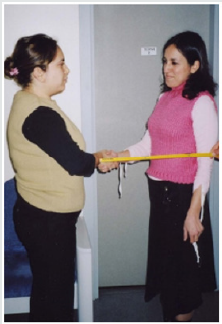

980 nm Diode Laser: A Good Choice for the Treatment of Pyogenic Granuloma

Abstract Pyogenic granuloma is a benign non/neo plastic mococutanous lesion . It is a reactional response to constant minor trauma and ca...